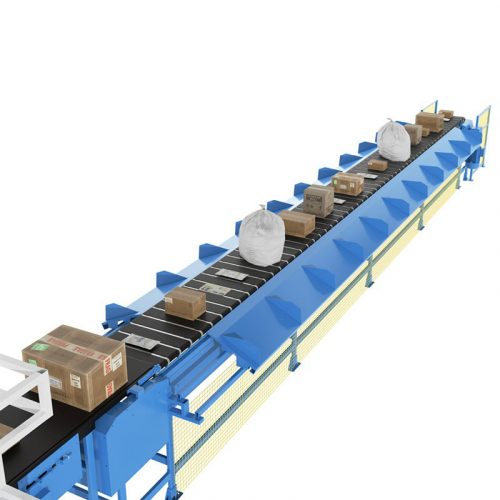
Whenever warehouse automation comes up, there is usually one question hiding in the background:
“Are we going to need fewer people?”
It is understandable.
Companies invest in conveyors, scanners, software, robots, and sorting equipment because they want to process more orders with fewer problems.
But in many warehouses, the more interesting question is not whether technology replaces workers.
It is what workers spend their time doing after the technology is introduced.
This is particularly clear with put wall sorting.
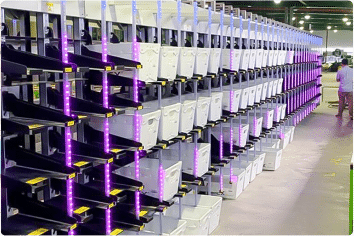
A Warehouse Worker Spends More Time Walking Than You Think
Imagine an operator sorting orders manually.
They pick up a product.
Check the label.
Look for the order.
Walk to a table.
Put the product down.
Walk back.
Pick up another product.
Look again.
Repeat.
None of these actions is particularly difficult.
But the walking adds up.
So does searching.
So does checking.
So does correcting mistakes.
A put wall sorter does not magically make the product move faster.
Instead, it gives the worker a better environment in which to perform the sorting task.
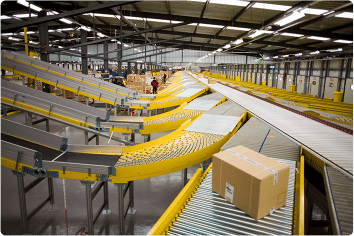
The Human Still Makes the Decision
In many put wall applications, the operator remains an important part of the process.
The system knows the order information.
The scanner identifies the product.
The software determines the destination.
But a person may still physically place the item into the compartment.
This can be a good thing.
Human workers are still very good at handling products that vary in size, shape, packaging, and condition.
A warehouse does not always need a robot to pick up every product.
Sometimes it just needs to give the worker better information.
Think of the Put Wall as a Physical Interface
This is an interesting way to look at the technology.
The software knows what needs to happen.
The put wall shows the worker where it should happen.
The barcode scanner connects the physical product with the digital order.
The operator completes the physical movement.
So the system becomes a bridge between software and people.
That is why a put wall sorting system can be useful even in warehouses that are not highly automated.
Why This Matters for E-Commerce
E-commerce has changed the nature of warehouse work.
Customers increasingly place small orders.
A warehouse may need to process thousands of orders containing only one, two, or three products.
The challenge is no longer simply moving large quantities of goods.
It is handling a huge number of small decisions.
Which product?
Which customer?
Which shipment?
Which box?
Which destination?
The put wall helps organize one of those decisions: order consolidation.
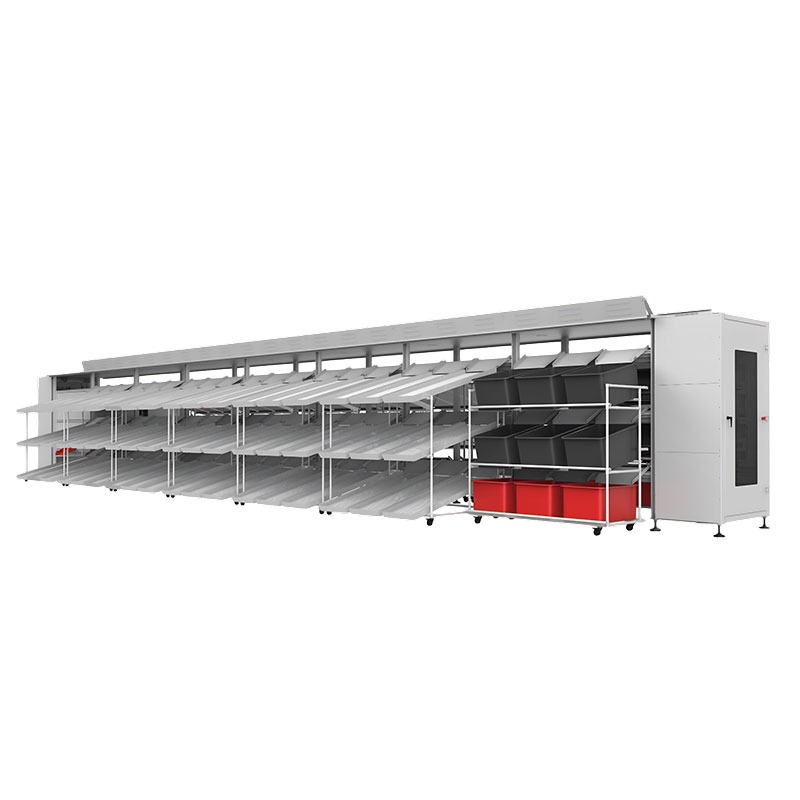
Automation Doesn’t Have to Mean a Completely New Warehouse
Another misconception is that warehouse automation requires rebuilding everything.
It doesn’t.
A warehouse can introduce automation in stages.
For example:
Stage 1: Barcode-based sorting
Stage 2: Put-to-light
Stage 3: Conveyor integration
Stage 4: WMS integration
Stage 5: Additional automated handling equipment
The exact path depends on the business.
The advantage of this approach is that the company can solve today’s bottleneck without spending tomorrow’s budget.
The Best Automation Is Often Quite Boring
This may sound strange, but good warehouse automation is often not very exciting.
It doesn’t need to look futuristic.
It needs to work.
It needs to be easy for operators to understand.
It needs to handle the products reliably.
It needs to communicate with the warehouse software.
And it needs to keep working on a busy Monday morning when order volumes are twice what everyone expected.
That is a much better definition of automation than simply counting how many machines are installed.
Where Put Walls Make the Most Sense
Put wall sorting is particularly interesting for operations with:
- Many individual customer orders
- Small numbers of items per order
- Frequent order consolidation
- Apparel and fashion products
- E-commerce fulfillment
- Retail distribution
- 3PL operations
- Small and medium-sized products
It is not the answer to every warehouse problem.
But when order consolidation is the bottleneck, it can be remarkably effective.
Technology Should Make the Job Easier
The real purpose of a put wall sorter is not to make a warehouse look more automated.
It is to make the work easier to organize.
The operator should spend less time searching.
The warehouse manager should have better visibility.
Orders should be easier to consolidate.
And mistakes should be easier to prevent.
That is where warehouse automation becomes useful in the real world.
Not when there are more machines.
When there is less unnecessary work.
For many apparel, e-commerce, and fulfillment operations, that is exactly the role a put wall sorter can play.