Cross Belt Sorter vs Linear Sorter: Choosing the Right Configuration for Your Parcel Volume
If you are planning an automated parcel sorting line, the first big decision is usually the same: cross belt sorter vs linear sorter. Both machines read, transport and divert parcels automatically, but they are built for different layouts, different parcel mixes and very different throughput ranges. Choosing the wrong configuration means paying for capacity you cannot use — or, worse, buying a sorter that chokes the day volumes spike.
This guide breaks down how each system works, where each one performs best, and the questions you should answer before you commit to a layout.
What Is a Cross Belt Sorter?
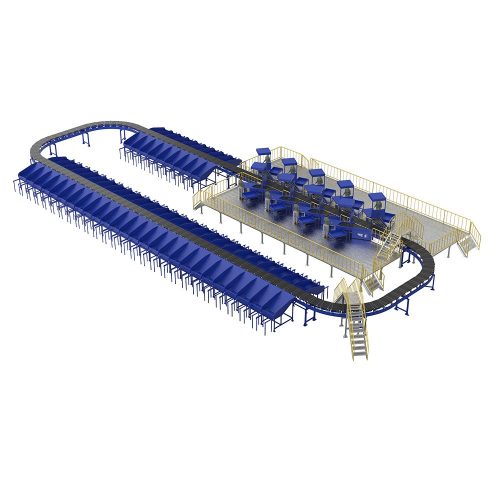
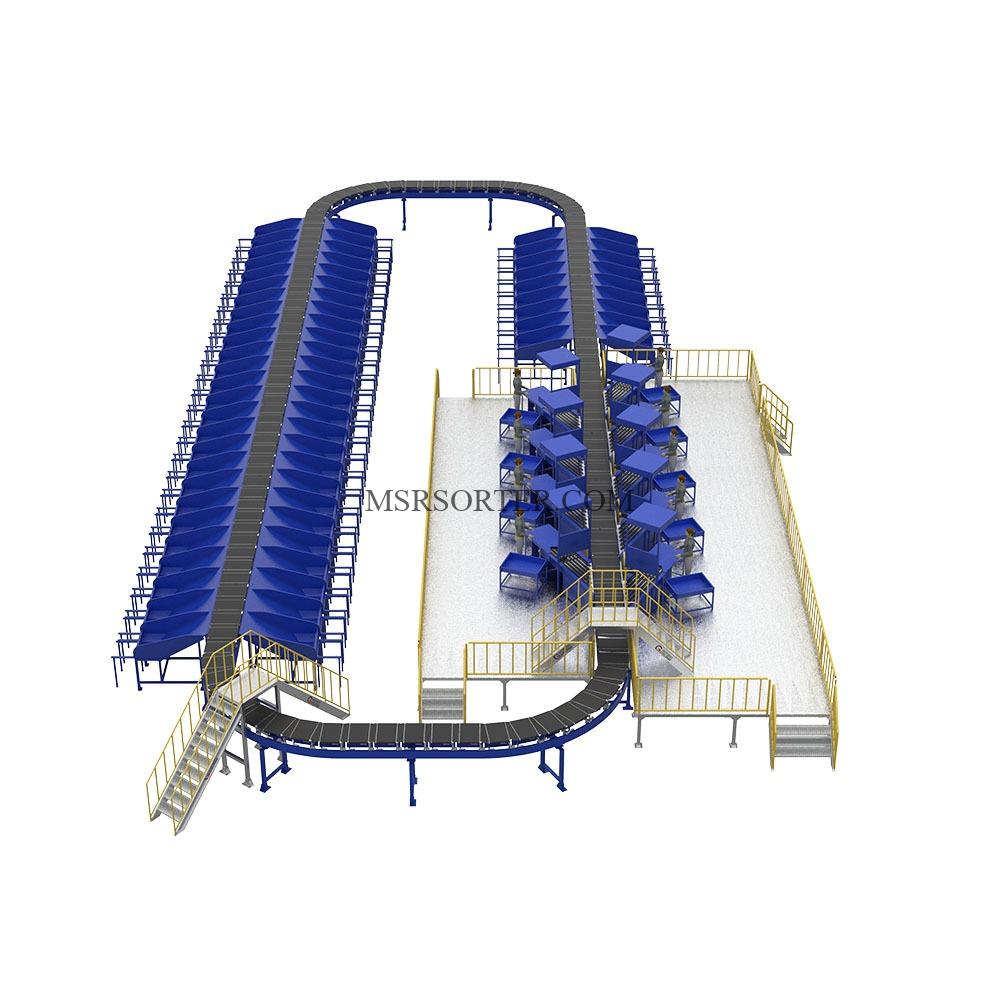
A cross belt sorter is a loop of small, independently motorized belt carriers mounted on a chain or linear motor track. Each carrier holds one parcel. When the parcel reaches its destination chute, the carrier’s belt fires sideways and pushes the item into the chute — no tilt, no pusher arm needed.
Because every carrier can carry a parcel, the system moves a continuous stream of items with high density. That makes loop cross belt systems the workhorse of large e-commerce and express hubs.
Typical profile: – Throughput: commonly 8,000–20,000 parcels per hour, with high-end installations going higher depending on length and carrier speed – Layout: closed loop (oval or racetrack), with chutes on one or both sides – Parcel handling: boxes, bags, poly mailers, envelopes and most standard e-commerce parcels; gentle handling suits fragile items – Footprint: long loop, large footprint, but the loop can be stacked or shaped to fit the building
What Is a Linear Sorter?
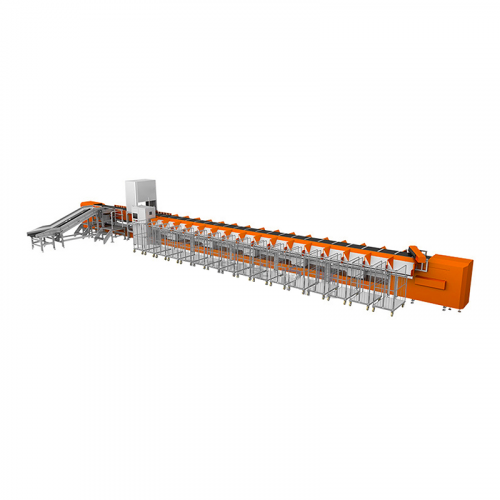
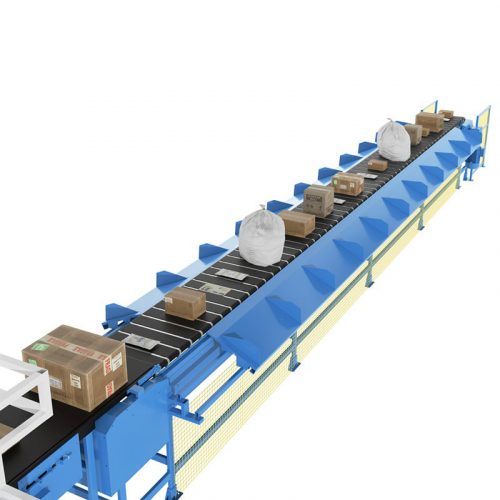
A linear (inline) sorter is a straight conveyor where parcels are diverted sideways at each chute. The best-known variants are the linear cross belt sorter and the narrow belt (sliding shoe-style) sorter. On a linear cross belt, small belt modules run inline and fire parcels sideways into chutes; on a narrow belt sorter, angled wheel or belt sections pop up and steer the parcel off the line.
Linear systems are simpler in layout and significantly cheaper per chute. They suit mid-volume operations, depots with limited floor space, and sites where the building is long and narrow.
Typical profile: – Throughput: commonly 2,000–6,000 parcels per hour, depending on length and induction count – Layout: straight line, chutes on one or both sides – Parcel handling: regular boxes and bags; highly sensitive to very small or unstable items depending on the diverter type – Footprint: long and narrow — fits warehouses where a loop would not
Key Differences at a Glance
Factor
Cross Belt Sorter (Loop)
Linear Sorter
Layout
Closed loop, chutes both sides
Straight line, one or two rows of chutes
Typical throughput
8,000–20,000+ parcels/hour
2,000–6,000 parcels/hour
Footprint
Large loop, flexible shaping
Long and narrow, more compact width
Parcel mix
Boxes, bags, envelopes, fragile items
Regular boxes and bags best
Expansion
Add track length and carriers later
Length is fixed by building and chute count
Cost per chute
Higher
Lower
Best fit
High-volume hubs, e-commerce fulfillment, express
Mid-volume depots, small hubs, retrofits
How to Choose Based on Volume
Below ~5,000 parcels/day. At this level, a linear sorter — or even a well-designed manual-to-mechanical solution with a DWS station — is usually the right call. The capital cost of a loop cannot be justified by utilization alone.
~5,000–30,000 parcels/day. This is the decision zone. If your site is long and narrow and you need 20–60 chutes, a linear system delivers automation at roughly half the investment of a loop. If your parcel mix includes many small items, bags and poly mailers, a linear cross belt handles them more reliably than wheel-style diverters.
30,000+ parcels/day. Loop cross belt is the standard answer. Density, continuous flow and high chute counts (100+) make it the only configuration that keeps up with peak-season spikes without adding labor shifts.
When a Hybrid Approach Makes Sense
Many distribution centers do not choose one system for the whole building. A common design is:
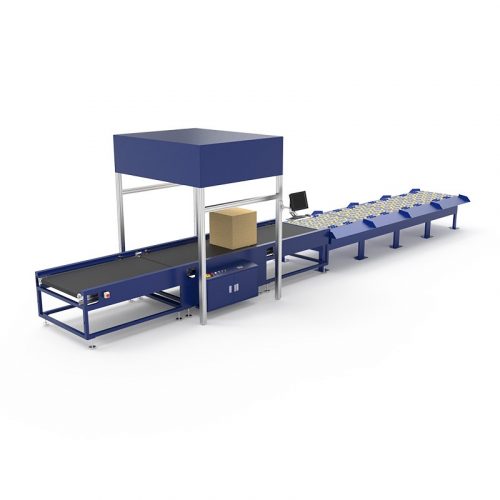
DWS + induction at the head of the line, where every parcel is dimensioned, weighed and scanned before it enters the sorter;
a linear sorter for the fast-moving small- and mid-size stream;
a separate manual or semi-automated station for oversized and irregular items that no sorter can handle economically.
Mixing configurations lets you pay for automation where the volume is, and keep flexibility where the volume is not.
Other Factors to Consider
Parcel mix stability: If more than a few percent of your parcels are very small, soft or oddly shaped, prefer belt-based carriers over pop-up diverters.
Future growth: A loop can be extended by adding track and carriers; a linear line is harder to extend beyond its building length. If you expect 30%+ annual growth, plan the layout for expansion from day one.
Integration with DWS: Whichever sorter you choose, feeding it with accurate dimension, weight and barcode data at induction improves sorting accuracy and gives you reliable billing data for couriers and customers.
Maintenance and spares: Belt-based carriers have more moving parts per carrier but simpler mechanics per chute; ask your supplier for documented uptime data and spare-part lead times before signing.
Final Thoughts
There is no universally “better” sorter — only the configuration that matches your volume, your parcel mix and your building. Work out the realistic peak-hour figure first, walk your building with a line designer second, and only then compare price tags.
MSR designs and manufactures both loop cross belt and linear sorting systems, as well as the DWS stations that feed them. Tell us your daily volume and parcel mix, and we will recommend a configuration with the throughput, footprint and cost numbers you can take to your board.