Why Apparel Warehouses Are Looking at Put Wall Sorters Again
There is a point in the growth of an apparel warehouse when the old way of sorting orders simply stops working.
At first, everything seems easy.
A few workers pick the products, put them on tables, check the order numbers, and send the finished orders to packing. When there are 100 orders a day, nobody thinks much about the process.
Then there are 500 orders.
Then 1,000.
Suddenly, the same warehouse starts looking very different.
Workers are walking back and forth between tables. Finished orders are mixed with unfinished orders. A T-shirt for one customer ends up in another customer’s order. Someone has to stop packing because an order is missing one item.
This is often where a put wall sorter starts to make sense.
The Problem Is Not Always Picking
When warehouse managers talk about fulfillment problems, picking usually gets most of the attention.
But in many apparel operations, picking is not actually the biggest problem.
The real headache comes after picking.
Imagine a worker has picked 50 individual products. Those products belong to 30 different customer orders.
Now someone has to figure out:
Which shirt goes to which order?
Which order is complete?
Which order is still waiting for another item?
And where should each product be placed?
Doing this manually for a few hundred orders is possible. Doing it every day at a much larger scale is where mistakes start to appear.
A Put Wall Gives Every Order a Place
The idea behind a put wall is surprisingly simple.
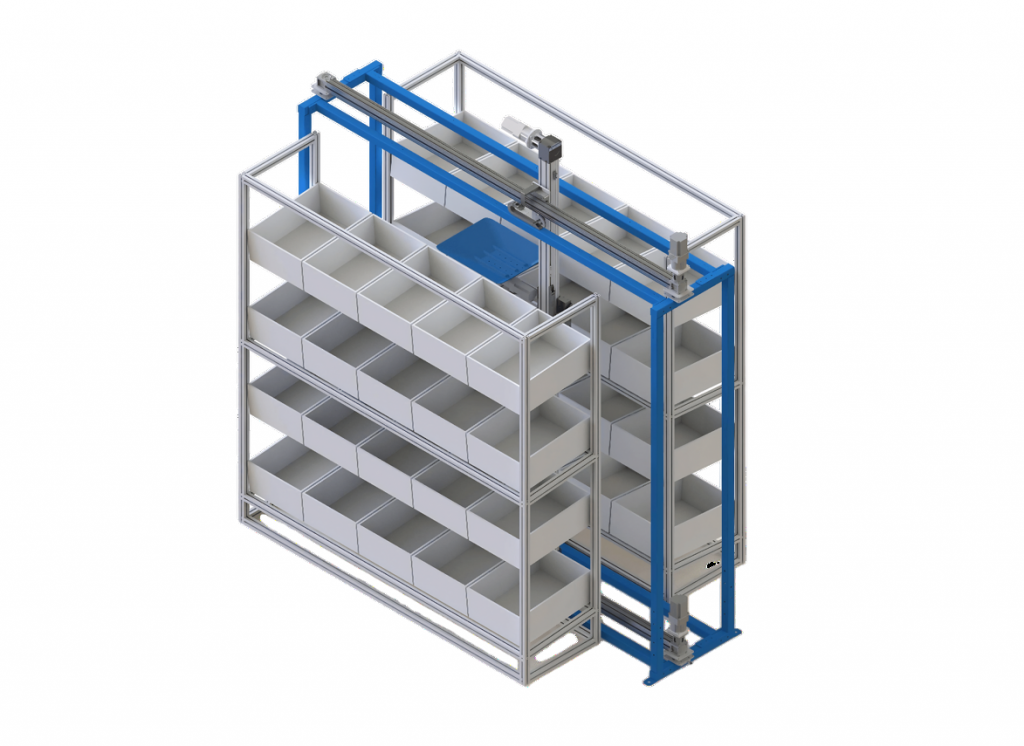
Instead of putting products on a large table and trying to remember where everything belongs, you give each order its own location.
One compartment can represent Order #1025.
The next one can be Order #1026.
Another can be a retail store, a wholesale customer, or a shipping batch.
When an item is scanned, the operator knows where it belongs and puts it into that location.
Once all the required products are there, the order is ready for packing.
Nothing revolutionary.
But in a busy warehouse, simple organization can make a huge difference.
Why Apparel Is a Good Fit
Clothing creates a particular sorting problem.
A warehouse may have thousands of SKUs, but many individual orders contain only a few pieces.
One customer might buy a shirt.
Another buys a shirt and a pair of trousers.
Another buys three different sizes for a family.
The warehouse therefore needs to handle a large number of small orders rather than a small number of large orders.
This is exactly the kind of environment where a put wall sorting system can be useful.
It Doesn’t Have to Be Complicated
There is sometimes a tendency to assume that warehouse automation means robots everywhere, large conveyor systems, and a massive software project.
That is not necessarily the case.
A put wall can be relatively straightforward.
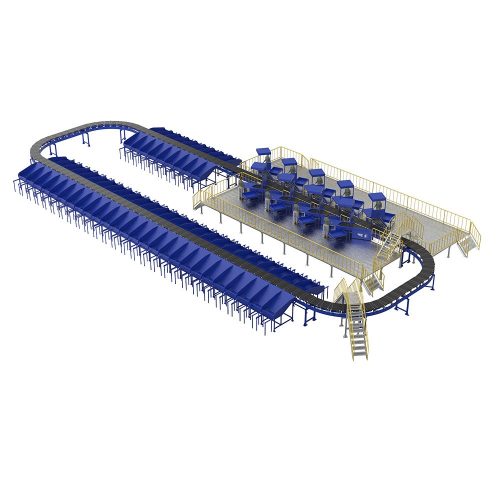
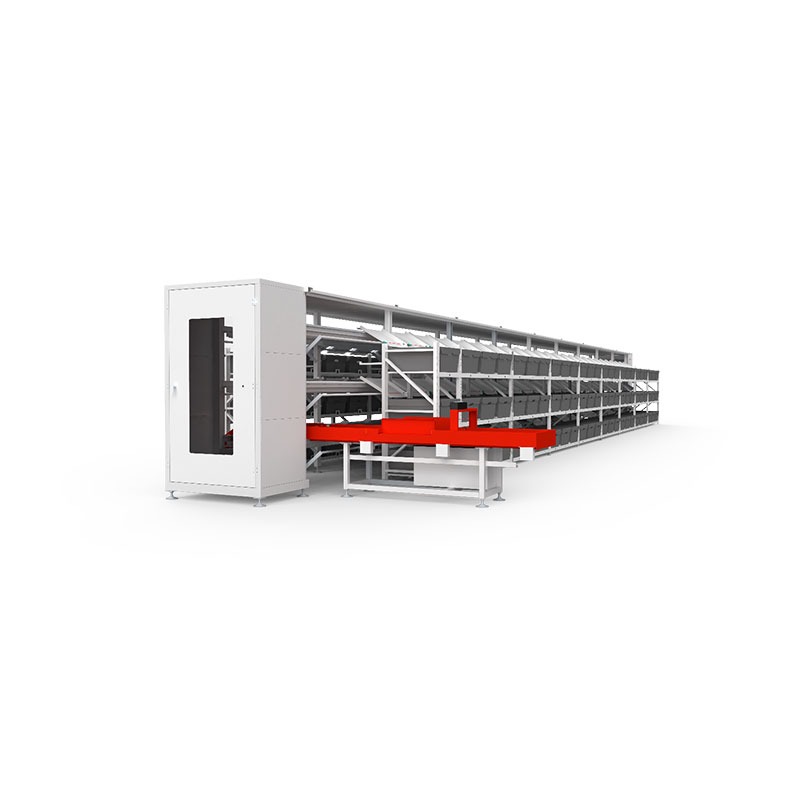
Depending on the operation, it can include barcode scanners, LED indicators, displays, conveyors, and software integration. Or it can be kept much simpler.
The important question is not how much technology can be installed.
The important question is:
What is actually slowing the warehouse down today?
If the answer is order consolidation, a put wall may be a much better investment than automating something that is already working well.
Start With the Workflow, Not the Equipment
This is something we recommend when discussing a new sorting project.
Don’t start by asking, “How many compartments do I need?”
Start with the warehouse.
How many orders are processed every day?
How many items are normally in one order?
How long does an order stay in the sorting area?
What happens when an item is missing?
Where do completed orders go?
How many people are working at the station?
These questions determine the design far better than simply choosing a standard put wall size.
A Small Change Can Fix a Large Bottleneck
Warehouse automation does not always need to be dramatic.
Sometimes the biggest improvement comes from fixing one annoying part of the process that workers deal with hundreds of times every day.
For apparel and e-commerce warehouses, order sorting is often one of those areas.
A well-designed put wall sorter gives every order a clear destination and gives operators a much more organized way to work.
It may not look like the most sophisticated piece of automation in a warehouse.
But sometimes the simplest equipment solves the most frustrating problem.
MSR Package Sorting Solutions
Typically replies within minutes
Let’s Build Your Smart Logistics Solution Together